 truongad
Plan a first Disneyland family trip around three choices: how many park days you want, which experiences matter to each child, and where everyone will rest. A shorter list with room for lunch and a break is easier to enjoy than a schedule that depends on every queue being short.
Connect the park plan to the stay budget
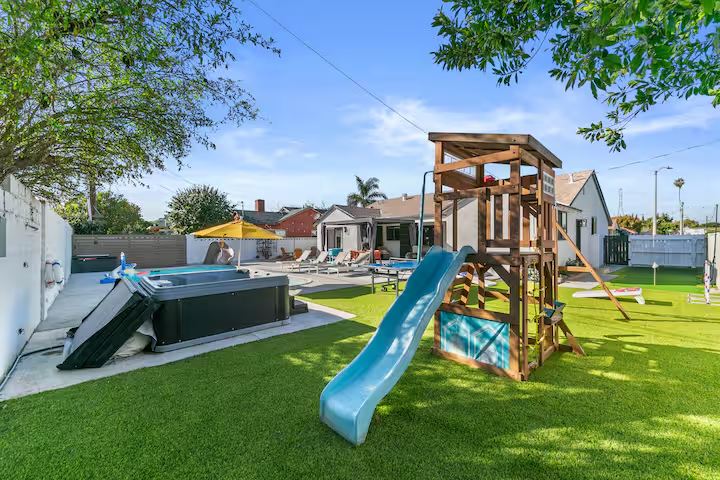
AN5 lists a pool and theater, with pool heating charged separately by season and a two-day minimum. Decide which day will be a home day before paying for heating. Check the Disneyland parking arrangements and park rules independently of the accommodation booking; a home’s driving estimate does not include security or arrival logistics.
Sources and booking checks: Disneyland official parking information; AN5 on Airbnb. Details reviewed October 2, 2026; confirm dates, availability and current terms before booking.
In this guide
How many days should you allow?
One park day can work when you accept that you will choose a handful of priorities. Two park days make it easier to give Disneyland Park and Disney California Adventure separate attention. A longer stay is useful when you want a rest day between them, especially with young children or grandparents.
| Your family’s priority | A practical starting plan |
|---|---|
| A first taste of Disney | One park day, three priorities, an optional evening |
| Both theme parks | Two park days with separate priority lists |
| Toddlers and an afternoon nap | Shorter park blocks and a realistic return route |
| Two families with mixed ages | Shared meals, separate ride groups, one meeting point |
These are planning suggestions, not promises about how much you can complete. Arrival and departure days should count as travel days unless your actual flight and check-in times leave useful space.
Sort tickets and reservations before building the schedule
Disneyland currently requires guests aged three and older to have valid admission and a park reservation for the same date and park. Check availability for the whole group before making other nonrefundable plans. Save confirmations where both organizing adults can find them.
Decide whether you will genuinely use a Park Hopper option. Moving between parks adds another decision during an already busy day. For a first visit, a one-park plan may fit better; families with a specific attraction list in both parks can compare the added cost and current hopping rules.
Give each child a small priority list
Ask everyone to choose one must-do experience and one optional extra. Check height requirements and ride descriptions together: being tall enough does not mean a child enjoys darkness, sudden drops or loud effects. Group nearby choices on the park map instead of crossing the park for each person’s turn.
For mixed ages, plan a split after the first shared activity. One adult can take older children to their choice while another handles a gentler activity. Set a named meeting place and a lunch window; a vague promise to meet somewhere later is harder to manage when phones run low.
Protect meals and a proper break
Choose the lunch plan before everyone gets hungry. A booked meal, an early counter-service stop or a packed snack strategy can each work, subject to current park policies. Carry what your family needs for the first part of the day rather than relying on an immediate shopping stop.
If you expect to nap at your accommodation, calculate the full trip back: leaving the attraction, walking to transport, collecting the car, driving and settling the child. Then allow the same journey in reverse. Our Disneyland transport guide helps you compare that with staying for a shorter continuous day.
Check the calendar for your actual dates
Use Disneyland’s operating calendar close to your visit for park hours, entertainment and closures. A seasonal celebration advertised in an older article may have ended, and a nighttime show should be treated as a possibility until it appears on your date’s schedule. Keep one evening flexible instead of promising a particular show to the children.
Before leaving home, confirm tickets, reservations, transport, weather, stroller rules and your first meal. For a ready-to-adapt schedule, use our three-day Anaheim family itinerary. Compare Anaheim family vacation homes once you know how much time you will spend at home between outings.
Quick questions
Is a rest day worth adding?
It can be, especially between two long park days. A rest day only helps if it stays lighter: a slow breakfast, a short outing and an early dinner are enough.
Is the closest accommodation always the best choice?
No. Compare the actual route to the entrance, sleeping arrangements and total price. A convenient hotel may suit a short visit; a home may suit families who will use separate bedrooms and shared meals.
Featured image: Pixar Pier and the Incredicoaster at Disney California Adventure, Anaheim. Photo: Eric Vo / Unsplash.
Suggested itineraries are flexible planning examples. Check current attraction opening, admission and property details for your travel dates.